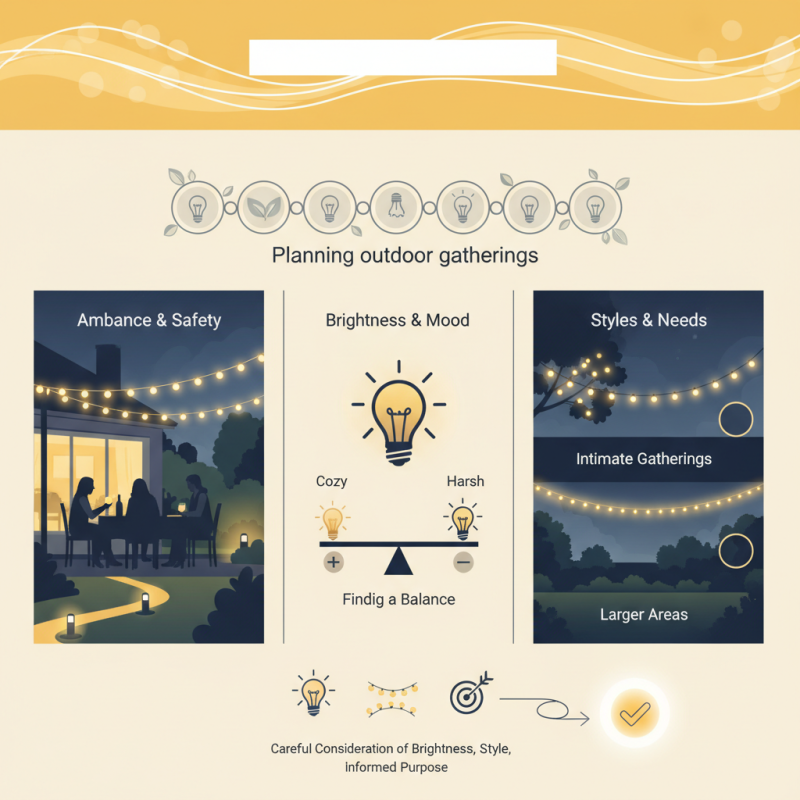
When planning outdoor gatherings, lighting plays a key role. The right illumination creates ambiance and ensures safety. One popular choice is outdoor string lights. But what is the brightest lumens for outdoor string lights? Understanding this helps in selecting the perfect option.
The brightness of string lights is crucial for visibility and mood. It's not just about aesthetics; it's about functionality too. Many assume that higher lumens mean better light. However, too much brightness can feel harsh in cozy outdoor spaces. Finding a balance is essential.
Outdoor string lights come in various styles and brightness levels. Some lights are designed for intimate gatherings, while others can illuminate larger areas. Evaluating your specific needs will help in making an informed choice. Ultimately, achieving the best lighting requires careful consideration of brightness, style, and purpose.
When choosing outdoor string lights, understanding lumens is essential. Lumens measure brightness, affecting how your space feels. Higher lumens mean brighter lights, perfect for well-lit gatherings. Aiming for 100 to 300 lumens per bulb is a good guideline for outdoor settings. This ensures visibility without overwhelming light.
Consider your outdoor environment. Soft lighting can create a cozy atmosphere, while brighter lights work well for parties or workspaces. Striking the right balance takes thought. Too many lumens can create glare. However, insufficient brightness can leave your area dim and uninviting.
Tip: Always test your lights before installation. Hang a few strings at different heights and observe the glow at night. Adjust until you find the perfect brightness. Remember, lighting can transform outdoor spaces. Your choice in lumens can significantly impact mood and ambiance. Aim for a warm glow that invites guests while keeping the space functional.
When choosing outdoor string lights, understanding lumens is essential. Lumens measure brightness. The right amount of lumens creates a cozy atmosphere. Too many lumens can feel harsh. Too few lumens may leave areas dim and uninviting.
Several factors influence lumens ratings. The color temperature of the bulbs matters. Warmer light typically feels softer and more inviting. Cooler light can appear more sterile. Distance between lights also affects how brightness is perceived. A well-distributed layout can enhance overall ambiance. Environment plays a role too; larger spaces may require more lumens for effective illumination.
Different settings demand different lighting. Outdoor gatherings, for example, benefit from vibrant, inviting light. Yet, over-illumination can detract from intimacy. Reflecting on the intended use of your outdoor space is vital. Consider how the lights interact with your environment. The ultimate goal should be a balance between aesthetics and functionality.
When choosing outdoor string lights, understanding lumens is essential. Lumens measure the total light output. For cozy patios, aim for 100 to 200 lumens per bulb. This range creates an inviting atmosphere for gatherings. In contrast, for larger spaces or task areas, consider 200 to 300 lumens. This brightness ensures visibility without overwhelming the senses.
Research shows that optimal lighting varies by setting. For example, a dining area benefits from softer illumination to enhance relaxation. According to industry reports, optimal strength is often dictated by the space's purpose. It’s crucial to assess your needs before purchasing.
Tips: Test different bulb types. LED bulbs are energy-efficient and long-lasting. Consider mixing brightness levels for depth. Create zones with varied lumen outputs for a layered effect. Always remember, too much light can create glare. Regularly check for burned-out bulbs to maintain uniform lighting.
| Outdoor Setting | Recommended Lumens | Recommended String Length (feet) | Best Installation Height (feet) |
|---|---|---|---|
| Patio | 150-300 | 20-30 | 8-10 |
| Garden | 100-200 | 15-25 | 6-8 |
| Backyard | 200-400 | 30-40 | 10-12 |
| Wedding/Events | 300-600 | 40-50 | 12-14 |
| Pathway | 30-100 | 10-15 | 3-5 |
When choosing outdoor string lights, the type of light source matters significantly. LED lights are known for their high efficiency. They produce more lumens per watt compared to incandescent bulbs. This means they can illuminate spaces brightly while consuming less energy. Many homeowners prefer LEDs for patios and gardens.
Incandescent lights have a warm glow that many find appealing. However, they offer fewer lumens per watt. This results in higher energy consumption and shorter lifespans. In many cases, incandescent bulbs will burn out quickly, requiring frequent replacements. This can lead to added costs and hassle over time.
The choice between LED and incandescent often reflects personal preference and practicality. Some may enjoy experimenting with different bulbs. Yet, it's essential to evaluate their impact on brightness and energy use. Are you maximizing your outdoor space's potential? Consider these factors carefully for better illumination.
When choosing outdoor string lights, brightness is key. A perfect lumens range can dramatically impact your space's atmosphere. Carefully evaluate your lighting needs before making a purchase. For example, areas for dining should be brighter, while cozy corners require softer lighting. Balance is essential for a harmonious outdoor setting.
One tip for selecting outdoor string lights is understanding lumens. A higher lumen count means brighter lights. For example, 100-200 lumens per bulb works well for cozy ambience, while 300-500 lumens per bulb is suited for task lighting. Another tip is to consider the color temperature. Warm white lights create a relaxing environment, while cool white lights offer a vibrant feel.
Be mindful of the length and spacing of your string lights. The distance between bulbs can affect illumination intensity. Keep in mind that different bulb shapes alter the spread of light. Trying multiple arrangements can help balance aesthetics and functionality. Adjust as needed until your outdoor area feels just right.
: Lumens measure brightness. They determine how well-lit your outdoor space feels.
Aim for 100 to 300 lumens per bulb. This range suits different outdoor settings well.
Testing lights helps you find the correct brightness. Hang them at different heights and observe the glow.
Warmer lights feel inviting, while cooler lights appear sterile. Choose based on the atmosphere you want.
The distance between bulbs influences perceived brightness. A well-distributed layout enhances overall ambiance.
Excess lumens can create glare, making the area uncomfortable. Balance is key to achieving a cozy feel.
Dining areas need brighter lights, while cozy corners require softer ambience. Evaluate each space's needs carefully.
Consider length, spacing, and bulb shapes. These factors affect light spread and overall aesthetics.
Larger spaces require more lumens for effective illumination. Reflect on your specific outdoor area for best results.
Adjusting the height, spacing, or bulb type can help. It’s important to find the right balance that suits your needs.
When considering outdoor string lights, an essential aspect to understand is lumens, which measure the brightness of light. This article explores what is the brightest lumens for outdoor string lights, emphasizing how different settings and purposes influence lumens ratings. Factors such as the ambient environment and desired mood play a crucial role in determining the ideal brightness for your outdoor space.
Additionally, the article compares LED and incandescent light sources, highlighting their impact on both brightness and energy efficiency. Readers will find tips for selecting the right outdoor string lights tailored to their needs, ensuring a well-lit and inviting atmosphere for various outdoor activities. By understanding these concepts, you can make informed decisions for your outdoor lighting projects.
