How to Hang String Lights on Concrete Walls Without Drilling?

Time:2026-06-13 Author:Isabella
0%

String lights create a warm, inviting atmosphere, especially on outdoor patios or indoor spaces. However, hanging them on concrete walls poses a challenge. Many homeowners worry about drilling holes. This can damage the wall and compromise its integrity. Understanding how to hang string lights on a concrete wall without drilling offers a practical solution.

Using removable adhesive hooks or clips allows you to achieve the desired aesthetic without permanent alterations. These tools can support the weight of the lights and are easy to apply. However, their effectiveness depends on the surface preparation. It's important to clean the wall thoroughly for better adhesion. Also, check the weight limits of the hooks you choose.

Even with these solutions, results may vary based on conditions like humidity or temperature. Sometimes, the lights may not stay in place as expected. Being open to adjustments can enhance the overall look. By exploring non-invasive methods, you can light up your space while maintaining the wall's integrity.
How to Hang String Lights on Concrete Walls Without Drilling?

Choosing the Right Type of String Lights for Concrete Walls

When choosing string lights for concrete walls, consider the weight and design of the lights. Lightweight options are easier to attach securely without damaging the wall. Look for LED lights, as they are energy-efficient and produce minimal heat. They come in various styles, including fairy lights and globe lights, allowing for personalization of your space.

Another aspect to consider is the length of the string lights. Longer strands can create a more dramatic effect, but they may require additional support for proper placement. Ensure that the lights are weather-resistant if used outdoors. Adhesive clips or hooks designed for concrete can hold the lights in place, avoiding the need for drilling.

Before finalizing your choice, visualize how the lights will fit in your space. Think about the ambiance you want to create. It's essential to test a small area first. You may find it useful to adjust the height or distance between lights. This step can prevent frustrating mistakes later. Aim for a cohesive look, but don't be afraid to experiment with different arrangements.

How to Hang String Lights on Concrete Walls Without Drilling? - Choosing the Right Type of String Lights for Concrete Walls

String Light Type Material Install Method Best Uses Price Range
LED String Lights Plastic Adhesive Hooks Outdoor Patios $15 - $40
Globe Lights Glass Tension Wire Weddings $20 - $60
Fairy Lights Copper Wire Command Strips Indoor Decor $10 - $30
Solar String Lights Plastic Nails and Clips Garden Lighting $25 - $50

Assessing Wall Conditions and Preparing for Installation

Assessing wall conditions is crucial before installing string lights on concrete surfaces. Concrete can vary in texture and integrity. Many homeowners believe all concrete surfaces are the same, but this is misleading. According to a study by the National Ready Mixed Concrete Association, over 70% of concrete structures have varying degrees of porosity which affects adhesion methods. Testing a small area will save headaches later.

Preparing for installation involves ensuring the wall is clean and dry. Dust or dirt can inhibit adhesive strength. A report from the Adhesive and Sealant Council reveals that surfaces with even minor contaminants can reduce adhesion by up to 50%. This underlines the importance of meticulous preparation. Use a pressure washer or suitable cleaning method to remove any grime.

Lastly, selecting the appropriate adhesive or mounting solution is vital. Not every glue is suited for outdoor conditions. Weather changes can impact the effectiveness of adhesives, leading to failures. Industry surveys point out that improper adhesive choices contribute to 30% of installation failures. A well-planned approach will yield better results, saving time and resources.

String Light Installation Methods Assessment

Selecting Non-Damaging Adhesives and Mounting Options

When considering how to hang string lights on concrete walls, selecting the right adhesive is key. Non-damaging options are available that will allow you to hang lights without the need for drilling. Look for heavy-duty, removable adhesive strips or hooks designed for outdoor use. These can hold up well against weight and weather.

Tips: Always clean the wall surface before applying adhesive. Dust and dirt can affect the strength of the bond. Test a small area first to see how the adhesive performs.

Another option is to use suction cup hooks. These work well on smooth concrete surfaces. Ensure that the suction cups are properly sealed against the wall. Be aware that in humid conditions, they might lose their grip. Regularly check their adhesion to avoid string lights falling unexpectedly.

If you feel uncertain about your choices, reflect on the long-term effects. Non-permanent solutions are great, but they might require more frequent replacements. Weigh the pros and cons of the options available.

Step-by-Step Guide to Hanging Lights with Adhesives

Hanging string lights on concrete walls can dramatically enhance your space. Using adhesives makes it possible without drilling holes. Here’s a step-by-step guide.

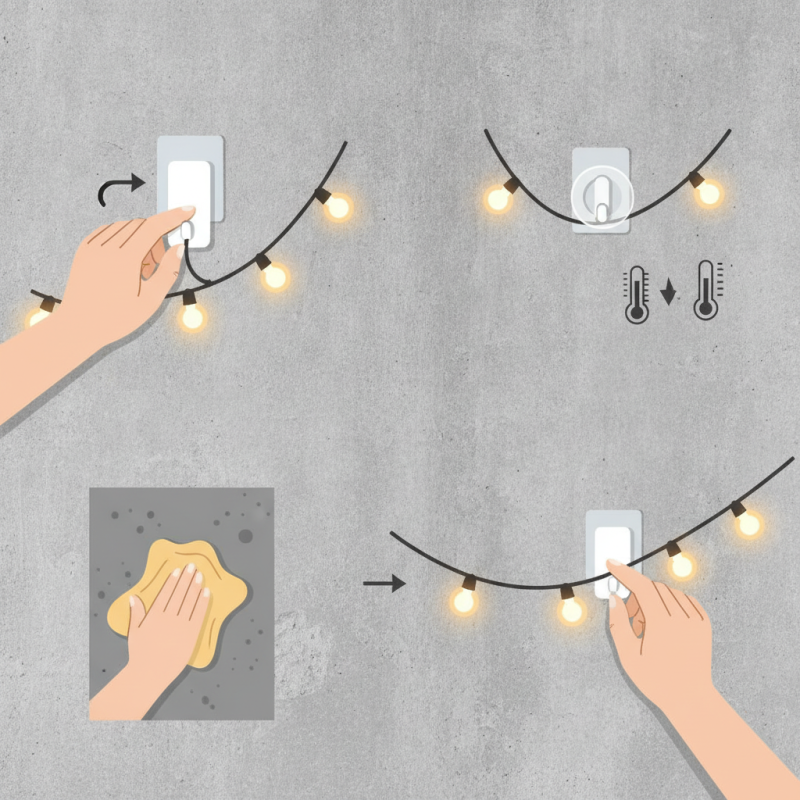
Start by choosing the right adhesive. Heavy-duty double-sided tape or removable adhesive hooks work well. Make sure your surface is clean and dry. This ensures a better grip for the adhesive. Measure the length of your lights to plan where they will hang.

Apply the adhesive in small sections. Press down firmly for a few seconds to secure it. If your lights are heavy, consider using multiple adhesive points. This helps distribute the weight evenly.

Tips: If the lights start to peel away, check the surface before reapplying. You might need to clean it again. Also, think about the temperature changes in your area. Extreme heat or cold can affect adhesion over time. Experimenting with different adhesives will help find the best fit for your project.

Safety Tips and Maintenance for String Lights on Concrete Walls

When hanging string lights on concrete walls, safety should be your top priority. According to a report from the National Safety Council, nearly 70% of home accidents occur due to improper installation of electrical fixtures. Using adhesive hooks specifically designed for outdoor conditions can significantly reduce these risks. Ensure the surface is clean and dry before application. This creates a stronger bond, enhancing safety.

Regular maintenance is essential for longevity. Inspect your lights every couple of months, checking for frayed wires or loose connections. In a survey by the Outdoor Lighting Perspectives, 85% of homeowners reported prolonged life of their string lights with routine checks. When storing your lights during off-seasons, keep them coiled loosely to prevent kinks and damage.

It's important to note that overloading circuits can lead to failures. Many experts recommend assessing the wattage capacity of your connections. Not every installation is perfect, and some may face challenges in mounting or maintaining light fixtures. Documenting your setup and any issues faced can improve future installations. This kind of reflection can lead to better results over time.

FAQS

: What should I consider when choosing string lights for concrete walls?

: Focus on the weight and design of the lights. Lightweight options are best for easy attachment.

Why are LED lights recommended for concrete wall installations?

LED lights are energy-efficient and produce minimal heat. They also come in various styles to suit personal preferences.

How can I ensure the string lights are securely attached?

Use adhesive clips or hooks designed for concrete. They hold well without damaging the wall.

What should I do to prepare the wall before installation?

Make sure the wall is clean and dry. Dust can reduce adhesive effectiveness by up to 50%.

What is the ideal method for testing wall conditions?

Test a small area of the concrete to understand its texture. Not all concrete surfaces are the same.

How can I prevent installation failures with adhesives?

Choose the right adhesive for outdoor conditions. Improper choices lead to many failures in installations.

How do I hang the lights using adhesives?

Start with a clean surface, measure your lights, and apply adhesive firmly in small sections.

What factors can affect the adhesion of the lights?

Temperature changes can impact how well adhesives hold. Extreme conditions may weaken the bond over time.

What if the lights start peeling away from the wall?

Check the surface condition again. You may need to clean it before reapplying adhesive.

Is it okay to experiment with different arrangements of lights?

Yes, experimenting can lead to a more cohesive look, but be wary of creating an unbalanced appearance.

Conclusion

Hanging string lights on a concrete wall can transform your space, but many people wonder how to hang string lights on a concrete wall without drilling. The process begins with choosing the right type of string lights that are suitable for outdoor or indoor use against concrete. It's essential to assess the wall conditions before installation, ensuring that the surface is clean and suitable for the chosen mounting method.

Selecting non-damaging adhesives and mounting options is crucial to avoid any long-term damage to the wall. A step-by-step guide will walk you through the installation process using adhesives, ensuring your lights are securely attached. Additionally, incorporating safety tips and maintenance practices will help keep your string lights looking great and functioning well, without compromising the integrity of your concrete walls.

Isabella

Isabella

Isabella is a dedicated marketing professional with a sharp focus on driving brand growth and engagement through strategic content creation. With an extensive background in digital marketing, she combines her passion for storytelling with her keen understanding of industry trends to deliver......